الشروط والأحكام
Halal, Ethical Savings and Investing in Qatar: What Actually Exists (and What's Limited) | Finspire
By Almaz Ruslan, 6 Sep 2026
Three ways to invest Shariah-compliant from Qatar, what each one actually costs to get into, and the gap nobody talks about.
Qatar has four full Islamic banks and a regulator that keeps Islamic and conventional banking properly separate. The infrastructure is real.
So why is it so hard to work out where to put QAR 1,000 a month?
Because the sector was built for institutions first. The retail doors were added later, and some open more easily than you'd expect, you just have to know they exist. Here is what exists, and what it takes to get in.
The routes and institutions below are examples, not a complete list of what is available in Qatar.
1. The Qatar Stock Exchange: cheapest to enter, most paperwork
Lowest money barrier of anything locally regulated. Also the least written about.
You register for a National Investor Number through Edaa, the QFMA-licensed operator running Qatar's central securities depository services (the same system also sits at qcsd.com.qa) at edaa.gov.qa. Registration itself costs around QAR 100. Log in with Tawtheeq or NAS, and the form auto-fills from your QID, the same data already linked through Metrash. You just verify what's there and fill in whatever's missing.
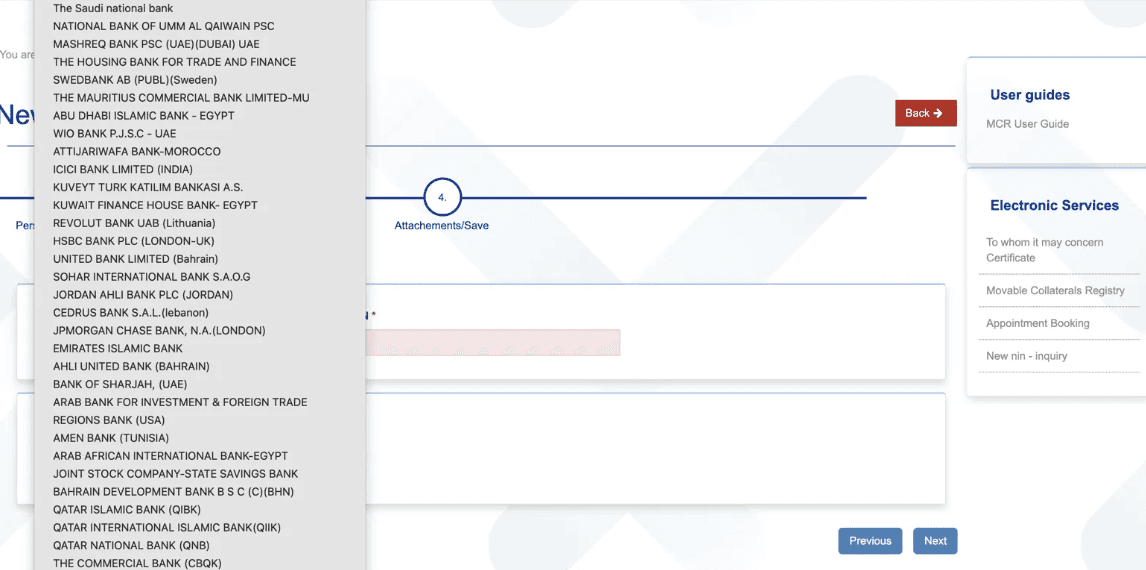
Three documents get uploaded: your QID, your passport, and an IBAN certificate certified by your bank. That last one doesn't have to be a Qatari bank it seems, Edaa's registration form lists a long roster of banks from other countries too, so it's worth checking whether your home-country bank is on it before assuming you need a local account first. See below image for a glimpse of available banks:
A salary certificate may or may not be required depending on your nationality, some nationalities are exempt. The easiest way to find out is to call Edaa's centre directly (+974 4015 0000 or 16014) and ask.
Once you're registered, you open an account with a licensed broker who trades for you. Two Qatar Islamic banks make that last step especially easy. Both QIB and Dukhan Bank let you link your NIN straight into their mobile app once you have a brokerage account, and buy or sell from your phone from there. The broker behind QIB & Dukhan's version is The Group Securities Company, a QFMA-licensed firm and the largest brokerage on the QSE.
You are not limited The Group, though. The QSE publishes the full list of licensed brokerage firms - worth checking regardless of which bank you use.
Once you are in, the Al Rayan Qatar ETF (QATR) tracks the QE Al Rayan Islamic Index, is listed on the QSE in riyals, and you can buy a single unit. No large minimum. Total expense ratio 0.50% a year.
Shariah screening of the underlying index is based on a fatwa from Al Rayan's Shariah Supervisory Board. If you want the specifics, AlRayan Investment can give you the reference directly.
On tax, the good news. Qatar does not charge withholding tax on dividends, has no stamp duty, and exempts capital gains on disposal of listed Qatari shares. Your costs here are the QAR 100 registration and your broker's commission. That is it.
Sources: edaa.gov.qa/en/signup · edaa.gov.qa/en/faq · qe.com.qa/how-to-open-an-account · qatr.com.qa · taxsummaries.pwc.com/qatar · qe.com.qa/web/venture-market/brokerage-firms
2. Managed funds: regional and global
This is where minimums appear, and where the shape of the barrier changes depending on which fund and which bank.
Regional: Al Rayan GCC Fund. The largest Qatar-based mutual fund, run by Al Rayan Investment (QFCRA No. 00045), holding Shariah-compliant GCC equities and sukuk. Its Shariah compliance is governed by AlRayan Investment's own Shariah Supervisory Board.
Minimum for individuals depends on how you get in. As a lump sum, AlRayan's own site lists two share classes: QAR 100,000 for Qatari nationals in the Riyal-denominated class, or USD 30,000 for any investor in the US Dollar class. Separately, the fund's April 2026 newsletter quotes QAR 35,000 to start and QAR 5,000 for top-ups, which looks like a different, smaller entry route into the same fund, most likely a monthly savings plan rather than a lump sum. Well, QAR 35,000 is definitely lower barrier to entry than QAR 100,000. As long as it gets to the same fund pool, I'll take it.
Subscription fee up to 1%, management fee 1.25% a year, plus a performance fee above a set hurdle if the fund does well.
One thing worth knowing: you do not need an existing AlRayan Bank account to invest in the fund. You can fund it by transferring directly from your salary or savings account at any other bank.
Global: HSBC Islamic Global Equity Index Fund. For exposure to global Shariah-screened equities rather than regional ones, the fund I hold myself is a useful worked example, AC USD accumulating share class, ISIN LU0466842654, Luxembourg-domiciled, tracks the Dow Jones Islamic Market Titans 100, ongoing charge 0.934% a year. Its Shariah compliance is monitored by the HSBC Global Shariah Supervisory Committee, which follows AAOIFI standards and issues an annual certificate published in the fund's annual report.
The fund's own minimum initial investment is USD 5,000. Most people get in below that through a Perpetual Savings Plan instead, and this is where knowing the mechanics matters.
You do not need to be a Premier customer, just like the AlRayan example above, and you do not need an existing savings or current account with HSBC, to open the investment account. What you do need is a nominated cash account held with the bank, which that account can and will be open specifically for this purpose, and once it exists, HSBC can deduct your monthly installment from your regular local bank account elsewhere and route it in.
The plan itself has a real cost worth doing the maths on. Commit, say, USD 1,000 a month and the first payment/deposit is the fee, it does not get invested. That is over 8% of your first year's contributions. Over five years, under 2%. Over ten, under 1%. Not really a percentage fee. A one-time toll at the door that only makes sense if you plan to stay.
After that, it comes out automatically on a set date each month. Nothing to pay when you take money out, and nothing to switch funds. Top up above your committed amount, though, and that extra is a separate transaction with its own fee.
Two more things worth knowing before you sign anything like this. It is typically sold execution-only, the bank makes no recommendation and does not assess whether the product suits you, which is normal and most people do not realize it. And "global" does some work: this fund was around 79% United States and 56% technology as of 31 May 2026, because Shariah screening filters out conventional finance and heavily indebted companies, which tilts what is left toward tech.
Sources: HSBC KID (22 Jan 2025) and factsheet (31 May 2026), both available via HSBC Asset Management's fund centre. For the full Key Facts Statement and current fees, the HSBC Wealth Centre at HSBC's new headquarters in Msheireb Downtown Doha is the best place to ask.
3. Doing it yourself: for a different kind of person
Already use an international brokerage platform, probably one from your home country? You can transfer out monthly and buy Shariah-screened ETFs directly. Widest choice, usually the lowest fees.
You do not have to go abroad for this route, either. Doha Bank runs its own international brokerage and Global Markets platform, through which residents can buy Shariah-compliant, US-listed ETFs directly from Qatar.
Either way, you are managing the portfolio yourself, and the assets sit outside Qatar's regulatory perimeter. Great if you want that level of detail. Not where most people should start.
Sources: dohabank.com.qa/treasury-and-investments/international-brokerage · dohabank.com.qa/db-global-markets-platform/products
Why I chose the HSBC Islamic route
I wanted something passive rather than actively managed, global rather than regional, and reachable through a bank I already had a relationship with, that narrowed things to about one option, the fund described above. I knew going in that Shariah screening tilts global funds toward tech; I did not fully appreciate how much until I looked at the breakdown properly. It is rated 6 out of 7 for risk and may not suit anyone planning to withdraw within five years, and I am not telling you the return.
The gap
It is not always a big balance or a salary assignment standing in the way. What stands in the way more often is not knowing the entry points exist, and the real, if smaller, cost of getting in once you do. The routes that are cheapest to enter tend to be the least written about. The ones that are well known tend to carry the biggest sticker-shock minimum, even when a smaller entry route sits quietly beside it.
Qatar does not have a shortage of Shariah-compliant products. It has a shortage of people telling you, plainly, what each door actually costs to open. It is somehow gate-keep for no reason. We work under compliance rules that do not let us publish return expectations or point you at a product, and honestly, content that does those things is doing something other than informing you.
Quick summary: what each route needs before you start
QSE / ETF — NIN via Edaa (QAR 100, auto-filled from QID/Tawtheeq), licensed broker, QID or passport and a bank-certified IBAN — home-country bank often accepted. Salary certificate exemption depends on nationality. No large minimum. QIB and Dukhan Bank both link your NIN in-app.
Managed fund, regional or global — regional (AlRayan) minimums start around QAR 35,000–100,000 depending on the entry route. Global (HSBC) has a USD 5,000 lump-sum minimum, or a monthly savings plan with a one-off entry fee equal to your first instalment — and does not require a Premier relationship.
International brokerage — either through your home platform, or via a Qatar bank's own global markets desk. You manage it, assets sit outside Qatar's regulatory perimeter.
Examples only, not a complete list of providers.
Educational information only - not financial, legal, or tax advice. These are summarized as of September 2026 and may change. Always verify your situation with your employer, your bank, and a qualified professional. Institutions and funds named in this chapter appear descriptively for education only. Finspire has no partnership or commercial relationship with any of them, makes no endorsement or ranking, and makes no Shariah-compliance representation about any third-party product.